Complete solution of Zhengzhou ICL operation: a scientific guide from 40 precise preoperative evaluations to long-term postoperative care!
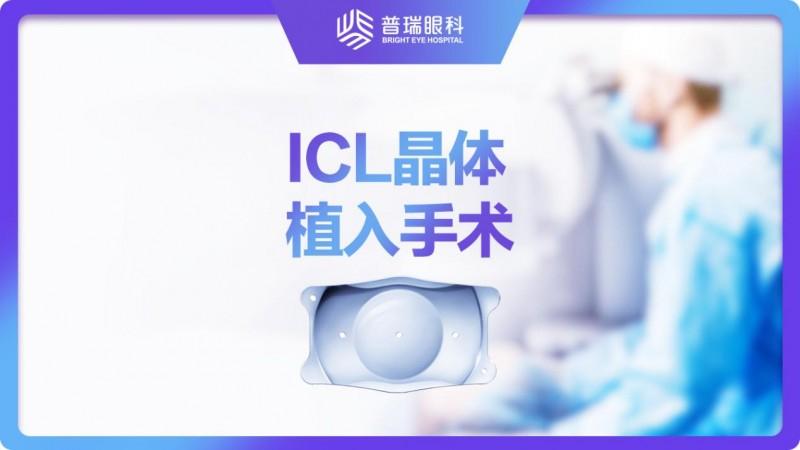
As an "additive" vision correction surgery, ICL(Implantable Collamer Lens) lens implantation provides a new choice for patients with high myopia who are not suitable for laser surgery. This paper will comprehensively analyze the whole process before, during and after ICL surgery from an academic point of view to help you understand this technology in depth.
Accurate preoperative evaluation: 40Scientific significance of item inspection:
The rigor of preoperative evaluation of ICL is directly related to the success rate and long-term safety of surgery. Professor Sun Bingji, a specialist in refractive surgery in Zhengzhou Purui Eye Hospital, and Guo Xirang, a specialist in corneal and ocular surface diseases, adopted a 1+N multidisciplinary joint consultation system and an exclusive national first-class optometry team to provide accurate surgical optometry data for the operation from front to back, so as to ensure the postoperative visual quality and safety.
1. Measurement of anterior chamber depth
The depth of anterior chamber (ACD) was accurately measured by optical coherence biological measuring instrument. Studies have shown that ACD>2.8mm can reduce the risk of postoperative ocular hypertension by 87%.
2. Analysis of corneal endothelial cells
Cell count and morphological analysis were performed by non-contact corneal endothelial microscope. Clinical standards require cell density > 2000 cells/mm, hexagonal cell ratio > 50%, and cell size variation coefficient < 40%.
3. Angle assessment
Ultrasonic biomicroscopy (UBM) was used to evaluate the opening degree of the angle of the chamber to ensure the smooth outflow of aqueous humor.
4. Total retinal examination
Ultra-wide-angle fundus imaging technology can detect peripheral retinopathy. It is found that the incidence of peripheral retinal breaks in patients with high myopia is as high as 8-10%, and preoperative treatment can reduce the risk of postoperative retinal detachment.
Surgical procedure: technical points of precision and minimally invasive
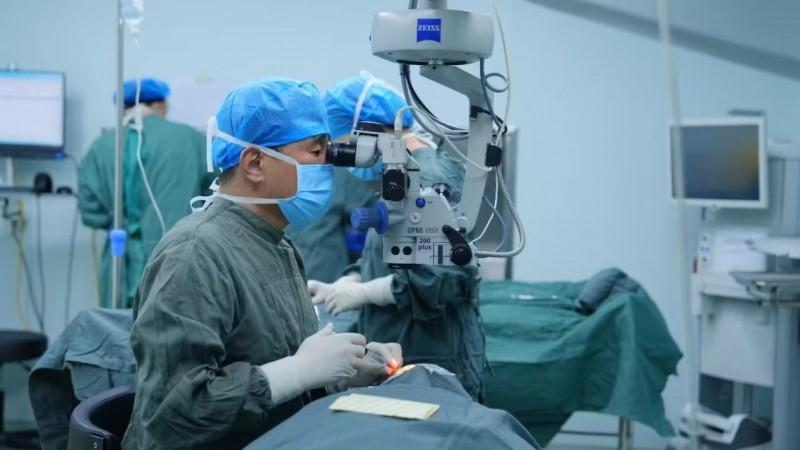
Although the operation time of ICL is short (about 10-15 minutes in one eye), the technical requirements are extremely high:
Anesthesia mode: topical anesthesia (0.5% procaine) is enough. The research shows that there is no significant difference in pain score between topical anesthesia and traditional peribulbar anesthesia.
Incision design: 3.0mm transparent corneal incision, located on the temporal side, research shows that the astigmatism after temporal incision is smaller;
Lens implantation: the foldable ICL lens was implanted into the posterior chamber by using the injector system, which was located between the iris and the natural lens;
Position adjustment: inject viscoelastic agent into the room to ensure that the crystal is unfolded and located in the correct position.
Postoperative nursing and long-term effect
Short-term recovery (1 week after operation), there may be slight foreign body sensation and tears 4-6 hours after operation.
The vision of 95% patients achieved the expected correction effect on the first day after operation.
Avoid water entering eyes and rubbing eyes for one week after operation.Mid-term nursing (1-3 months after operation):
1. Use antibiotics and anti-inflammatory eye drops to prevent infection and inflammation;
2. Avoid swimming, sauna and other activities that may cause infection;
3. Regularly review intraocular pressure and lens position.
Long-term follow-up (more than 1 year after operation):
The annual examination includes visual acuity, intraocular pressure and corneal endothelial cell count. According to the research (Journal of Refractive Surgery), patients’ satisfaction after 10 years of ICL is over 95%.
The crystal stability is good, and the rotation rate is less than 2%.
Special precautions:
About future cataract surgery:ICL crystal can be taken out at any time for routine cataract surgery. Studies have shown that there is no difference in cataract surgery effect between ICL implanted eyes and non-implanted eyes.
About sports adaptability:Normal sports activities can be resumed 3 months after operation, but it is recommended to wear protective glasses in antagonistic sports (such as boxing and basketball).
About Cosmetic Contact Lenses wearing:It can be worn occasionally for 3 months after operation, but the research shows that the Cosmetic Contact Lenses requirement of patients after ICL is reduced by 73% due to the improvement of visual quality.
Conclusion:As a safe and effective vision correction scheme, ICL surgery’s success depends on precise preoperative evaluation, precise surgical operation and standardized postoperative care. Choosing experienced doctors (such as Xie Bing, the official ICL certified expert) and medical institutions equipped with advanced equipment is the key guarantee to obtain the best surgical effect.