Tian Qiang, a "bird vendor", didn’t want to get in touch with reporters. After several times’ work, he agreed to talk to The Paper.
Only 35 years old, he has been engaged in bird trafficking for nearly 20 years and is quite "senior".
"Don’t listen to outsiders who say that (selling birds) makes more money. In fact, they are selling white powder and earning money from selling cabbage." Tian Qiang said that many people who are still selling birds are because there is no way. "Anyone who can find a way out has changed careers. Who will do this?"
He has had the idea of changing careers for a long time, but he has never been able to completely "wash his hands of it". "On the one hand, life needs economic resources, on the other hand, compared with working and farming, this business is more leisure and free … …”
Tian Qiang has been deeply involved in bird trafficking for 20 years and has made a name for himself. Even if you don’t sell birds yourself, someone will come to you. "It is not easy to resist the temptation when interests come to your door."
In 2016, in what Tian Qiang called the "strictest" year to crack down on bird catching and bird trafficking, he finally made up his mind to change careers.
Unlike Tian Qiang’s initiative to turn around, many people, like Zhou Tianyang, a part-time bird vendor, regretted it after being caught. "I won’t do it after cutting my hand."
In Tian Qiang’s view, the problem of bird trafficking takes time and generational change to solve. "I am the last generation of bird traffickers at this age, and there will definitely be no more."
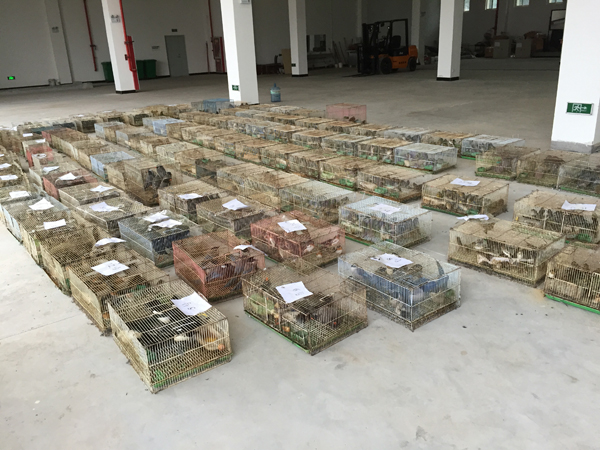
Birds seized by Shaanxi police and sold to freed people. The Paper reporter Wang Jiantu
Bird vendors in the north: releasing and playing with birds account for 80% of the demand
Tian Qiang was born in Tianjin. Like many partners around him, he liked catching birds since childhood. After dropping out of school as a teenager, he began to work as a bird seller.
Whether it is a dead bird that has been plucked and sent to a restaurant, a live bird that has been released in batches, or an ornamental bird that has been bought home by a lot of money in the underground flower and bird market, it is the "way to make money" for bird vendors.
Tian Qiang, a senior bird vendor, is well aware of the changes in three kinds of demand in the bird market.
He said,The proportion of "releasing" in the market has now surpassed that of "eating birds". "In the past, eating birds accounted for 40%, and releasing and playing with birds accounted for 30% each; Now, eating birds accounts for at most 20%, and releasing and playing with birds (ornamental birds) account for 40% each. "
Tian Qiang said that the highest profit in the bird-selling industry is the bird-playing market. "Ornamental birds are definitely expensive, and sometimes one can sell for tens of thousands of yuan.".
However, because trading places, which plays with birds, is still in the flower and bird market, it has been monitored by the forestry department for a long time, and the target of live birds is large, so the transaction is difficult.
Speaking of the bird market, Tian Qiang is like a few treasures, and her speech speed is also fast.
“Chinese has a long history of playing with birds, which first appeared in the Song Dynasty. Although it is strictly controlled now, it is still very popular in Beijing, Harbin, Shanghai, Nanjing and Chengdu."
In the bird-playing market, birds such as storks, embroidered birds and larks are very popular.Tian Qiang said that even though some sellers claimed that birds were kept, "as far as I know, they are basically 100% wild birds".
Tian Qiang believes that although the law stipulates that it is not allowed to hunt and manage wild birds, the uniformity of the law also hinders the inheritance of the tradition of ornamental birds. "The tradition of ornamental birds has such a long history that the state should not completely ban it."
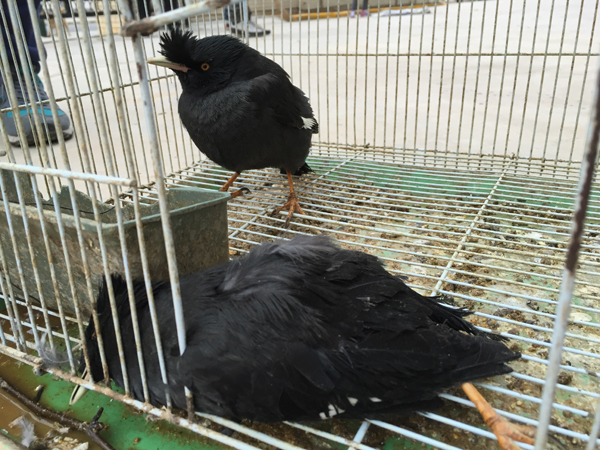
One of the birds sold to the releasers seized by Shaanxi police has died. The Paper reporter Wang Jiantu
As for the release, it is the bird dealers who use the goodness of human nature to "do evil".
Tian Qiang’s acquaintance with Liu Yidan, a bird protection volunteer of the animal protection organization "Let Migratory Birds Fly", originated from the "supply and demand relationship" between bird vendors and some believers.
Liu Yidan is a Buddhist. Before becoming a volunteer, she often bought a large number of captured wild birds from bird vendors and released them.
Liu Yidan said that since 2011, many bird vendors will find her and her lay group and sell them captured wild birds.
"There are more than 1,000 at a time. They bought about 10-20 yuan/one and sold it to us in 25 yuan/one." Liu Yidan said that in the past four or five years alone, the value of wild birds she bought and released from bird sellers exceeded 1 million yuan.
Believers have the habit of releasing wild birds on the first day, fifteenth day, birthdays, weddings and other important days, so some believers will find bird vendors and buy a large number of wild birds at one time to release them.
Things finally turned into "forced buying" by using kindness.
Liu Yidan said that many bird sellers will directly find them to buy birds because they are familiar with believers. "The captured birds will last for two or three days at most. If we don’t raise money to buy them and release them, the birds will only die."
Bird dealers usually hide the purchased wild birds in a hidden den. After finding believers to negotiate the price, they take them to the den and release them on the spot after collecting money.
The Paper noticed that selling live birds to believers can earn more difference than selling them to restaurants after skinning dead birds.
With the controversy over the non-standard "wild release", many believers like Liu Yidan began to transform into bird protection volunteers.
There is another reason for the transformation. "Later, more and more bird dealers were found, but there was really no money to buy it, so I could only report it. After that, I started volunteering and dismantled the net everywhere. " Liu Yidan said.
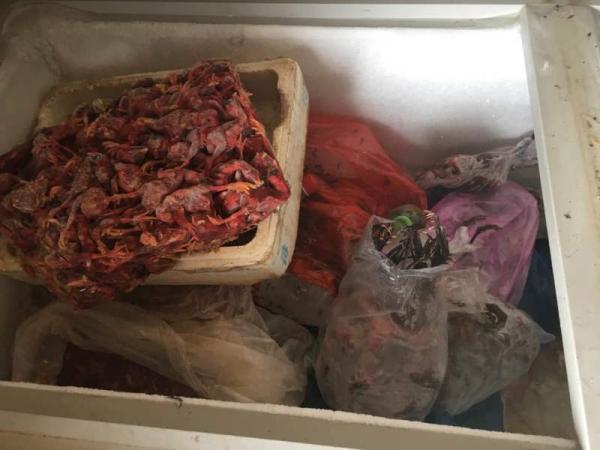
Frozen bodies of migratory birds seized in Pingle, Guangxi. These birds are sold to restaurants in Guangdong and Guangxi.
Southern bird vendor: mainly supplied to restaurants.
Different from playing and releasing birds in the north, the greater demand in the south is to eat birds.
On October 27th, The Paper met Zhou Tianyang who was detained for illegal and criminal activities involving wild birds in a detention center in Haiyan County, Zhejiang Province.
Unlike Tian Qiang, according to Zhou Tianyang’s account, he is just a "part-time" bird seller.
Zhou Tianyang said that he is mainly engaged in aquatic products business, and his business scope is to supply conventional aquatic products such as eel and crayfish to hotels.
Why do you sell wild birds part-time Zhou Tianyang said that only because the familiar restaurant owner offered that a guest wanted to eat game, he hoped that he could supply some wild birds by the way. "Sorry to refuse, I will bring some."
Zhou Tianyang said that he bought sparrows, yellow quails (collectively referred to by local people as white-browed thrush, gray-backed thrush, black-gray thrush, white-bellied thrush and spotted thrush), flower chickens and other birds from local bird catchers. The purchase and sale price is generally: the purchase price of sparrows is about 1.5 yuan/bird, and it is sold to the hotel 2.2 yuan/bird. The purchase price of yellow quail is 10 yuan/quail, which is sold to the hotel 12 yuan/quail; The purchase price of Huaji is 38 yuan/chicken, and the price for selling to hotels is 42-45 yuan/chicken.
According to the report of the Propaganda Department of Haiyan County Committee, Zhou Tianyang has bought birds from many local bird catchers, and so far more than 100 birds such as sparrows and chickens have been sold.
In this regard, Zhou Tianyang said that the money he earned from selling wild birds this year did not exceed 2,000 yuan in total. "If no one eats birds and there is no demand, I will not sell birds."
Captain Hu, the law enforcement brigade of Haiyan Agricultural Economics Bureau, once revealed to The Paper that there are indeed illegal markets for buying and selling birds, and these illegal markets have "promoted" local illegal bird catching. For example, some restaurants in Nanbei Lake Scenic Area openly and illegally operate game business.
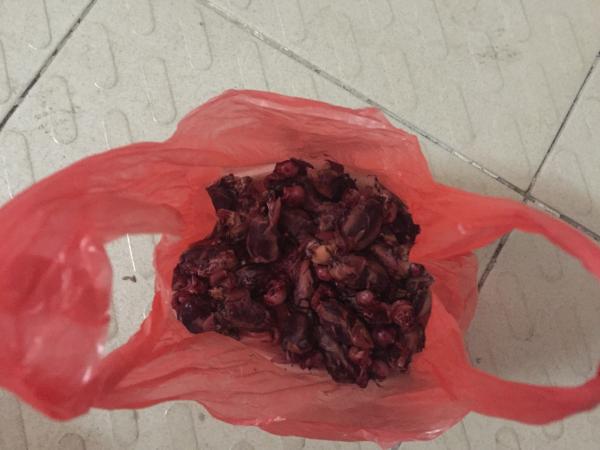
Samples of "Sparrows" provided by bird vendor "Zhonghua" around Xingfu Market in Conghua District, Guangzhou. Most of the sparrows in the Guangdong market come from outside Guangdong. The Paper reporter Li Wei
Guangdong is the "hardest hit" for selling and eating birds.
At the end of October, The Paper visited many markets in Guangzhou. Except for some merchants who sold wild turtledoves, no other wild birds were found for sale, and sparrows and herons were hard to find.
A merchant selling wild turtledoves in Lianhe Market, Huangpu District, Guangzhou, told The Paper that sparrows and night herons can’t be bought basically without acquaintances. "If you need, you can set a time, and I can help you ask someone to take sparrows."
In the name of buying wild birds, The Paper also made an unannounced visit outside Xingfu Market in Taiping Town, Conghua District.
After a motorcycle driver demanded to pay the agency fee in 100 yuan, he helped the reporter to contact a bird vendor and made an appointment to meet at a hotel. "It’s all outside the market, and you can’t get it through an intermediary like me, and you’re not an acquaintance." The motorcycle driver said that because the wind is too tight now, buying and selling in the market is tantamount to sitting still.
In the lobby of the hotel, bird vendor Zhong Hua said that there are many kinds of wild birds to choose from, such as sparrows, night herons, egrets, owls, etc., and took out paper and pens to let reporters write down the categories and quantities they needed.
"We have a 20 yuan here, and the owl costs 1,000 to 2,000 yuan." Zhong Hua said that most of the people looking for birds are restaurants in Guangzhou. Usually, hundreds to thousands of sparrows or herons are bought at a time, and they are only sold to customers introduced by acquaintances. Recently, due to the peak period of eating wild birds, the supply of various birds is in short supply.
Zhong Hua said that most of these birds were transported to Guangzhou Railway Station by train and stored in the warehouse in Beixing Town, Huadu District, Guangzhou. "Buyers can’t go, only we can get the goods and hand them over to the buyers at the appointed place."
When talking about whether this kind of transaction is risky, Zhong Huaxiao said that this kind of business has existed for many years and is deeply rooted.
Because The Paper is a stranger, and when pretending to buy birds, he buys a small amount. Zhong Hua is wary. "I tell you the truth, no matter what purpose you come to me, I am not afraid."
In addition, on November 16, more than 30,000 live migratory birds were rescued in Pingle County, Guilin City, Guangxi Province. The local forest public security official said that their trafficking destinations were also restaurants in Guangdong and Guangxi.

35,000 migratory birds (part of them) seized in Pingle, Guangxi. The destination of these birds is restaurants in Guangxi, Guangdong.
"Selling birds is relatively leisure, earning little but enough for the family."
Zhou Tianyang, sitting at the fence of Haiyan detention center in Zhejiang Province, was wearing a blue vest, with white hair and a lonely look.
He said that he knew that it was illegal to catch and collect birds, and the government had seen the billboards erected on the hillside, but he didn’t know it would be so serious. "With the luck, people (restaurants) let them take a little."
As he spoke, he sighed at the difficulties of his family, saying that his elderly parents were ill in bed, his wife helped wash dishes in the hotel, and his family lived only on the money earned by his aquatic products business.
"If there is a restaurant, I will bring a little by the way and earn some money to subsidize my family." Afraid that the reporter wouldn’t believe it, Zhou Tianyang was a little excited. "You can all go to my house to watch it."
Zhou Tianyang, who is currently in criminal detention, said: "I won’t do it after cutting my hand."
Tian Qiang, a veteran bird vendor who has been working for more than 20 years, finally agreed to talk to The Paper, partly because he planned to change careers.
Tian Qiang told The Paper that the people who used to sell birds together gradually switched to work to make a living, and they also thought about changing careers and might go home to farm.
Liu Yidan, a bird-protecting volunteer, said that in recent years, Tian Qiang has repeatedly provided clues to the bird-protecting volunteer team to catch wild birds illegally. "It is especially related to the sparrows (yellow-breasted sparrows), and he also went with us to dismantle the nets and save birds."
In Tian Qiang’s impression, the bird vendors around him began to change careers one after another, starting in 2007 and 2008.
"Since 2007 and 2008 ‘ Yan ’ When I got up, I heard that someone was arrested, and then more and more people changed their careers and didn’t do this. " Tian Qiang added, "This year is the strictest … …”
On October 8th, The Paper was the first to report that Tianjin and Tangshan were surprised to see "catching birds in the sea with a net of 10,000 meters". During the National Day, volunteers from the animal protection organization "Let Migratory Birds Fly" dismantled nets about 20,000 meters in the two places, found more than 5,000 dead birds and rescued more than 3,000 live birds.
The incident aroused great concern. Subsequently, the State Forestry Administration decided to launch a 40-day nationwide "net-cleaning operation" to strengthen the field patrol and guarding of key areas and routes such as the distribution areas, breeding sites, wintering sites, migratory stopovers and migratory passages of migratory birds and other wild animals, and strictly prevent the use of illegal tools such as net catching and poison to catch and hunt migratory birds and other wild animals indiscriminately.
Regarding the direction of changing careers in the future, Tian Qiang said with disappointment that he was ready to go back to farming. "Selling birds doesn’t earn much more than farming … …”
In fact, Tian Qiang had the idea of changing careers many times before. A few years ago, when a bird trafficker was detained by the police in a certain place in the northeast, when he turned to volunteers to provide clues to bird catching nets after witnessing a sharp decline in the number of sparrows (yellow-breasted sparrows), and when the fattening trading dens of wild birds were repeatedly investigated and dealt with by law enforcement agencies … …
Faced with the question of why he has repeatedly been involved in risks and returned to his old business, Tian Qiang explained that on the one hand, he has been doing this for a long time and has no other skills; On the other hand, compared with farming and going out to work, selling birds is more leisure, and although the money earned is not much, it is enough for the family.
He also said, "Selling birds is not as profitable as people outside say. In fact, the policy is good now, and farming earns much more than selling birds." If there is a better way to earn money, no one wants to catch and sell birds.
Tian Qiang told The Paper that he was very supportive of the protection of endangered and precious wild animals, but at the same time he also had another opinion. "I don’t think we should kill them all at once. For some birds with a large number and market demand, we should allow some legal hunting."
Tian Qiang also gave a specific operation path: after strict examination, the forestry department awarded hunting license to a small number of qualified bird catchers, and strictly stipulated which birds can hunt at what time, and paid a certain deposit.
(At the request of the interviewee, Tian Qiang and Zhou Tianyang are pseudonyms.)