CCTV News:The "Ocean Six" scientific research ship of China Geological Survey of the Ministry of Natural Resources returned to Guangzhou today (16th) after completing the shared voyage of deep-sea exploration. During the scientific research, Chinese investigators discovered a new large-scale active cold spring in the northern part of the South China Sea.
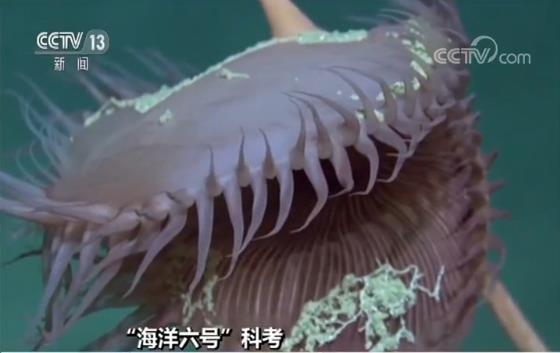
There is a set of biological communities around the cold spring that do not depend on photosynthesis. There is a view that it may also be one of the birthplaces of life on earth. During the discovery of the new cold spring, researchers found many magical creatures around the cold spring.
In the world below 1000 meters, there are always some magical creatures that make people open their eyes. In the unique ecosystem of the cold spring area, the bottom layer is the "autotrophic bacteria" that survive with chemical energy. Above these bacteria, there are clams, mussels and other organisms that rely on edible bacteria to survive.
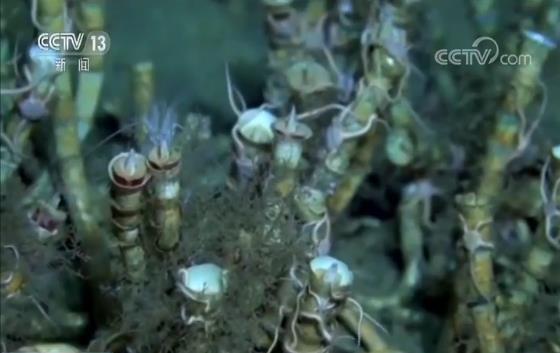
In the process of searching for cold springs, Chinese researchers first discovered a "tubular worm" which was praised by scientists as one of the longest-lived biological types on earth near the cold spring with a water depth of 1390 meters.
Gong Yuehua, a senior engineer of Guangzhou Marine Geological Survey of China Geological Survey, said that it is very old, even reaching 250 years, and it is one of the longest-lived animals found so far.
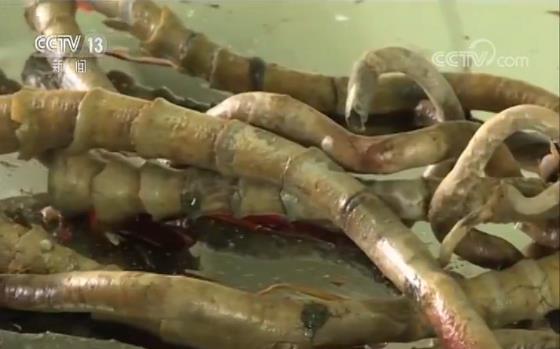
Gong Yuehua said that although tubular worms have been discovered by humans in recent years, it is the first time in China that such a large-scale and clear discovery has been made around cold springs.
Tubular worms rely on symbiotic sulfide-oxidizing bacteria to provide nutrition, so tubular worms have neither internal organs nor digestive tract.
Gong Yuehua, a senior engineer of Guangzhou Marine Geological Survey of China Geological Survey, said that it is bacteria that eat hydrogen sulfide and methane gas, while bacteria are in the stomach of tube worms. Worms and bacteria are symbiotic, and bacteria provide energy for tube worms.
Reporter Zhang lei said that it looks like a bamboo joint or a tree root, but it is actually a deep-sea animal. We look at this sample now, and it has red blood flowing out. It can grow up to 1.6 meters long at the longest.
At present, the relevant samples have been submitted to the natural gas hydrate and marine biology research group for research.