Reporter Yan Lijun correspondent Wang Kai
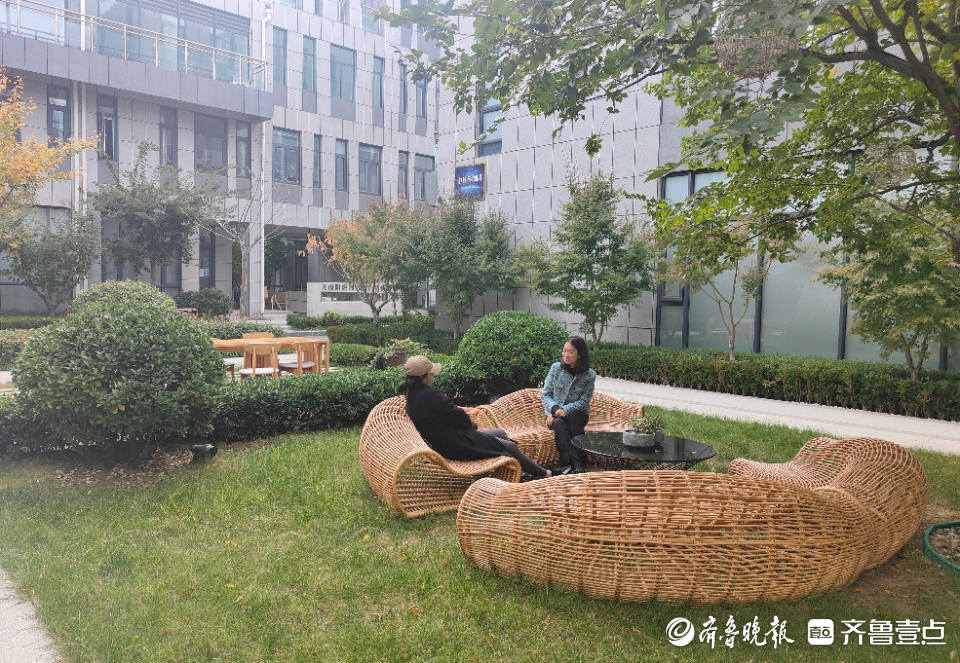
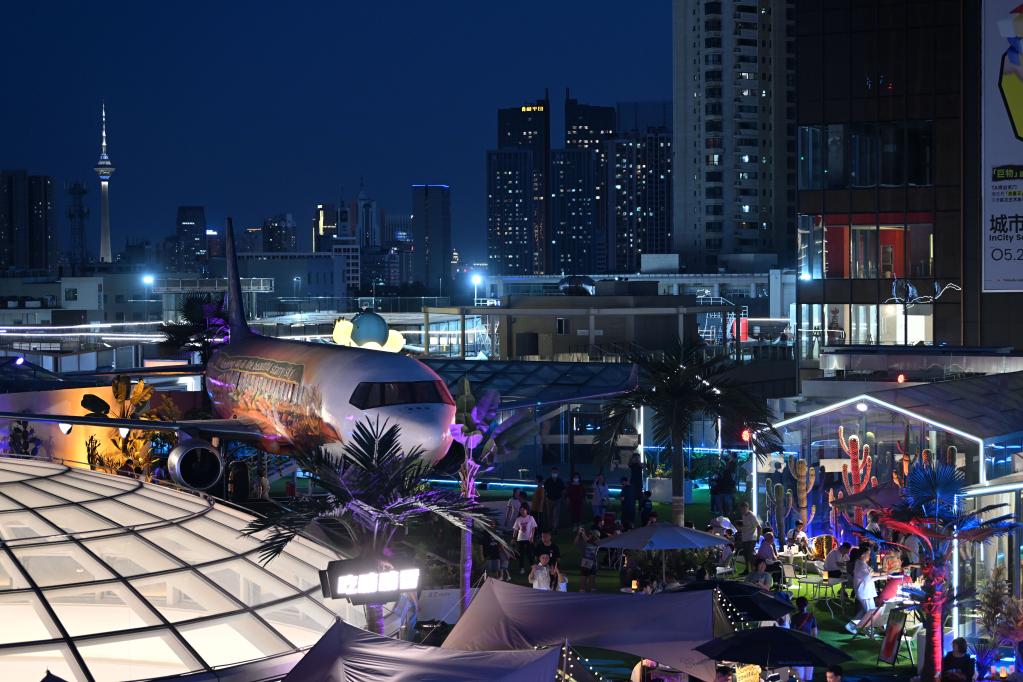
Along Yantai Changjiang Road all the way to the west, there is an open park that people passing by can’t help but stop. Passing through the patchwork buildings in the park, a lush leisure garden comes into view. There are green spaces, tables and chairs, and wooden rattan sofas scattered on the lawn, which gives people the illusion of straying into the garden.
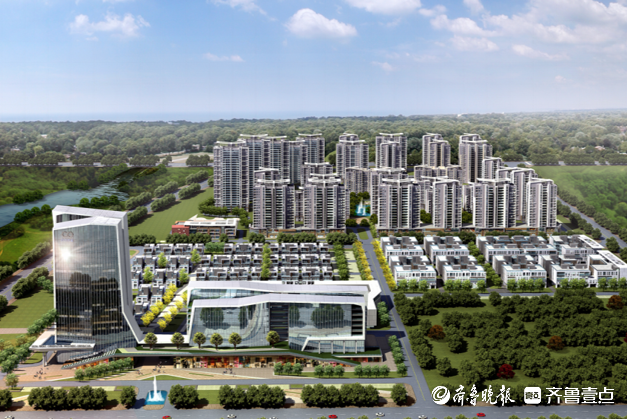
However, it is not a garden, but a "zero-carbon smart industrial park" built by Yantai Huangbohai New District-China Energy Conservation Science and Technology Park. Different from the traditional introverted and solidified office mode, we advocate a brand-new office concept that is more open, leisure and green. By building a green and ecological office environment and creating a leisure office atmosphere, we can meet the diversified needs of enterprises.
China Energy Saving Shandong Company.
As far as I can see, full of green
The overall building energy saving rate reaches 70%
In the autumn afternoon, the sun is just right, and the employees in twos and threes are lazily leaning on the sofa and talking happily. The relaxed and harmonious working atmosphere is fascinating.
Employees talk in the park.
Strolling along the lush path of the park, Sun Qing, the chairman and general manager of China Energy Conservation (Shandong) Energy Conservation and Environmental Protection Technology Co., Ltd., told the reporter that "zero carbon park" is strictly called near zero carbon park, which is a green park, that is, a park where the carbon dioxide emission of the whole park is equal to the carbon dioxide absorption.
"At present, the total energy consumption of buildings accounts for about 45% of the total energy consumption of society." Sun Qing said frankly that China Energy Conservation Science and Technology Park uses the building materials of the green building materials system. "The application ratio of green building materials reaches 30%, such as the energy saving rate of building envelope reaches 65%, and the energy consumption of sanitary appliances is reduced by more than 10% compared with the national energy saving standard." Sun Qing said, "The park adopts concave green space and vertical greening to create rainwater gardens and ecological tree pools, and rationally plan the layout of roads and rainwater pipes in the park. The annual runoff rainfall control rate of the park reaches 75%, the annual runoff pollution control rate reaches 55%, and the overall building energy saving rate reaches 70%."
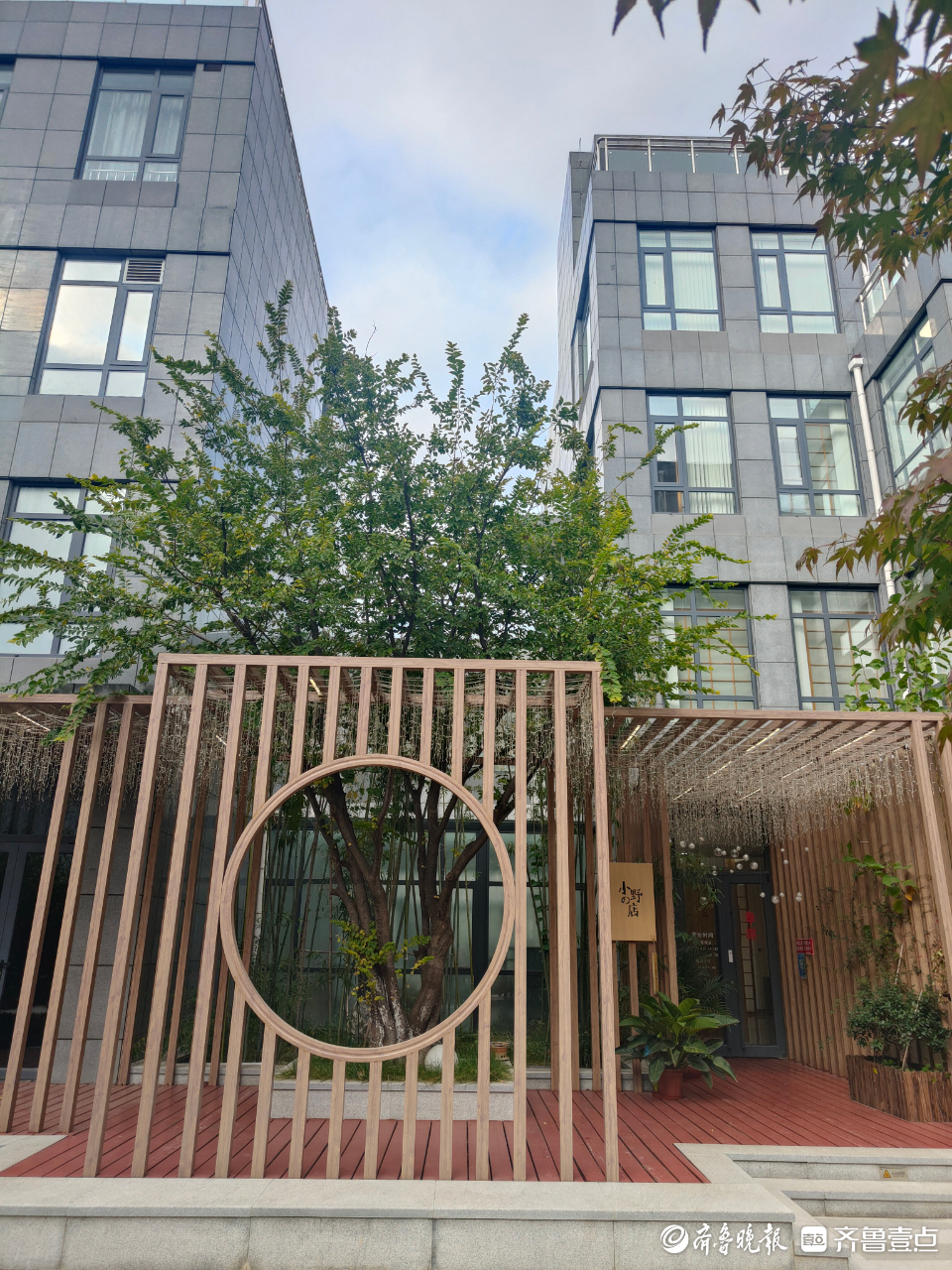
Green consumables are matched with the ecological concept of the park, and a garden-style headquarters new territory is created by the Liulin River. Being in the park, the reporter felt a broad space vision, and hid all the urban ecological landscape, as far as he could see, full of green. The staff of Xiao Ye Coffee Shop who works here said with a smile that this is an office building that people "don’t want to get off work". It is energized with fresh oxygen every day, so it is simply not too comfortable. Ms. Wang, a citizen who is walking in the park, joked: "Even if I don’t get paid, I am willing to come here to work."
"Coffee in Xiao Ye" hidden in the park.
In addition to building consumables and ecological layout, there is also a zero-carbon intelligent brain hidden in the park, which is the management platform of zero-carbon intelligent park independently developed by enterprises. Sun Qing said, "We use digital twin technology as the base, and build’ three platforms’-comprehensive energy management platform, carbon monitoring and management platform and park operation platform to intelligently collect and monitor the energy consumption of users in the park, monitor and control the operation status and loss of equipment, and help park enterprises accurately grasp energy consumption information, tap the potential of energy saving and consumption reduction, control costs, improve economic benefits, and realize energy allocation and optimization in the park.
"Full" just after delivery
Enterprises value villa-level office experience.
Such a "zero-carbon smart park" is not low in cost. But why build it?
In this regard, Sun Qing bluntly said that China Energy Conservation (Shandong) Energy Conservation and Environmental Protection Technology Co., Ltd. (hereinafter referred to as China Energy Conservation and Environmental Protection Company), as a wholly-owned subsidiary of China Energy Conservation and Environmental Protection Group, a central enterprise directly under the State-owned Assets Supervision and Administration Commission, has its own genes for energy conservation and emission reduction in its bones, coupled with the strong platform and resource advantages of the group company, so engaging in the construction and operation of green low-carbon parks and the development of zero-carbon and digital technology innovation industries has naturally become the mission and pursuit of Shandong Company. "The creation of a zero-carbon smart industrial park is to help realize the strategic goal of’ double carbon’. It is our mission to make the sky bluer, the mountains greener, the water clearer and the life better. " Sun Qing said.
With the increasingly stringent restrictions on carbon dioxide emissions, low-carbon related industries such as new energy, new materials, energy conservation and environmental protection have also developed. Sun Qing believes that this is a huge development opportunity, and it will inevitably create huge output value and social value. "Building a zero-carbon smart park is of great practical significance, not just a small local issue, but an overall strategic issue related to our country’s economic development in the next 30-50 years."
With the development direction, we have strengthened our confidence in construction. However, what Sun Qing didn’t expect was that the market feedback of the zero-carbon smart park was unexpected. It is reported that the first phase of China Energy Conservation Science and Technology Park was all "full" just after delivery.
"Two days ago, there were corporate consultants who wanted to settle in and needed 1,000 square meters, but we couldn’t even get a square meter." Sun Qing said, "The first phase of the Science Park has been warmly welcomed since it was delivered at the end of September, and now it is in full operation."
"Our price is not the lowest, but there are still companies willing to come." Sun Qing believes that it is the park that meets the diversified needs of enterprises and realizes the coordination among cities, parks and people. In this regard, Wang Xinfu, director of the comprehensive office of Ziguang Yeda Technology (Shandong) Co., Ltd., a park enterprise, said that there is a villa-level office experience, which has the dual advantages of office privacy and back garden, making people feel very comfortable.
Therefore, it is not surprising that there are honors along with the market applause. China Energy Conservation Shandong Company was awarded the soft certificate of "Comprehensive Management System of Near-zero Cycle Smart Park" and "Prediction and Implementation System of Carbon Neutralization Path for Two High-tech Enterprises" by the National Copyright Administration, which is regarded as a feedback for enterprises to actively practice the low-carbon concept.
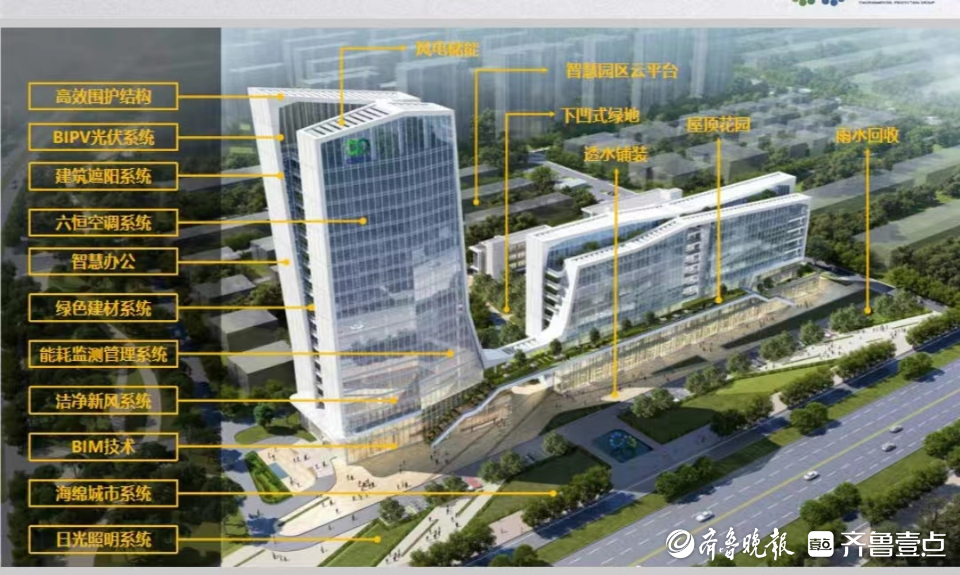
Some green technologies applied in the park.
The second phase will build an energy-saving building.
Create the first multi-certification green building in the province
After tasting the sweetness of creating a "zero-carbon smart park", China Energy Saving Shandong Company began to lay out a bigger plate.
According to Sun Qing, the company is working hard to realize the iterative upgrade from green park to zero-carbon smart park.
Among them, the second phase of China Energy Conservation Science and Technology Park Project will build China Energy Conservation Building, which will become Yantai Energy Conservation Demonstration Headquarters Building and Yantai Zero Carbon Smart Management Benchmark Demonstration Project.
China Energy Saving Building will adopt more than 20 energy saving and environmental protection technologies to create a smart office environment with constant temperature, humidity, oxygen, cleanliness, quietness and wisdom. By then, the overall building energy saving rate of China Energy Saving Building is expected to reach 75%, which is estimated to save energy by more than 35% and reduce carbon dioxide emissions by about 900 tons per year. The building will be the first multi-certification green building in Shandong Province under the new national standard system, and it is planned to apply for three-star certification of green building, LEED gold certification in the United States and WELL platinum certification in the United States at the same time.
At the same time, China Energy Conservation Shandong Company is actively promoting the construction of a new generation of zero-carbon smart industrial park project in the core area of Yantai Development Zone-China Energy Conservation (Yantai) Green Financial Industrial Park, and plans to build it into a city financial center and a headquarters economic gathering area. The project will adopt a regional distributed energy system, and the overall energy utilization efficiency is expected to reach more than 90%, and the overall building energy saving rate will strive to reach 82.5%. We will also provide carbon emission monitoring and management services, and build a real zero-carbon smart industrial park through various technical and intelligent management means, so as to set a leading example for actively promoting Yantai to enter a low-carbon era.
In addition, the company has jointly established China Energy Conservation (Shandong) Zero-carbon Technology Research Institute with leading enterprises and scientific research institutions, built an integrated platform for energy conservation and zero-carbon technology in China, and constructed three strategies of "near-zero strategy, recycling strategy and smart strategy", focusing on six implementation directions, so as to provide comprehensive zero-carbon smart services for the city and comprehensively promote the development and upgrading of zero-carbon industry.
Implementing "Double Carbon" Development in All Aspects
Yantai will build a leading international intelligent low-carbon city.
As the basic unit of urban development, industrial park is the core unit of industrial agglomeration development, and it is also the key foothold to reduce energy consumption, accurately reduce emissions, and promote the low-carbon and efficient development of regional economy. It is also the "bull’s nose" that China must hold to achieve the goal of "double carbon".
The Party’s Report to the 20th CPC National Congress proposed to actively and steadily promote carbon neutrality in peak carbon dioxide emissions. Based on China’s energy resources endowment, we will persist in establishing first and then breaking, and implement the peak carbon dioxide emissions Action step by step in a planned way.
Taking Yantai Huangbohai New District as an example, in addition to creating a "zero-carbon smart park", the first demonstration project of emission reduction and carbon reduction in the jurisdiction has been settled, and the first "zero-carbon community" in the city will also be delivered next year. Moreover, Shandong Haiyue Environmental Technology Co., Ltd., an enterprise under its jurisdiction, has also established the service brand of Dr. Lan, taking the model of "accounting verification+transaction consultation+green emission reduction" to provide customers with one-stop green emission reduction service and to be the consultant of customers’ green emission reduction.
These are just a batch of microcosm of Yantai’s race to the "Double Carbon" track. Yantai, which has good resources, is vigorously implementing the "Double Carbon" development strategy in all directions, aiming at taking the lead in building an internationally leading intelligent low-carbon city and building an internationally renowned green, intelligent and low-carbon development demonstration zone.
Yantai has further promoted industrial transformation and upgrading, promoted the optimization of energy structure in an orderly manner, accelerated the improvement of carbon emission trading mechanism, and actively built a clean energy system, a green manufacturing system and a low-carbon living system. Among them, the development plan of "one valley, one district, one island and one port", namely, T-Bay Double Carbon Smart Valley, Yantai 3060 Innovation Zone, Long Island International Zero Carbon Island and Penglai North Wind Power Home Port, has been compiled.
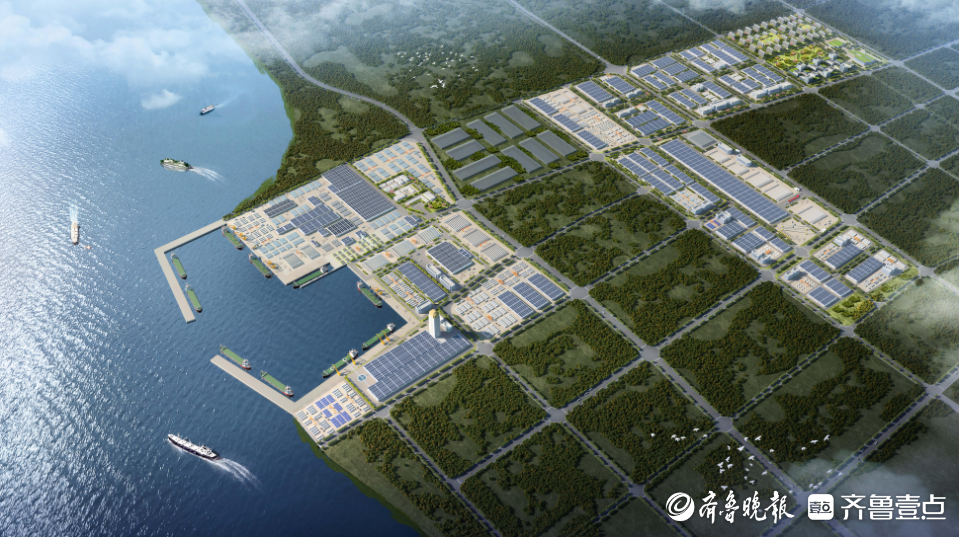
Aerial view of Yantai Penglai offshore wind power industry cluster park.
Some insiders believe that the realization of the goal of "double carbon" is a systematic revolution. In the process of carbon neutrality, cities should not "talk about carbon on the basis of carbon", but "play the piano with ten fingers", and make overall plans and considerations to enhance the relevance and coupling of measures. In the future, Yantai will also carry out new cooperation practices such as "carbon sink+data+finance+cultural tourism+people’s livelihood".
News clue reporting channel: download the "Qilu Yidian" APP in the application market, or search for the WeChat applet "Qilu Yidian", and 600 reporters in the province will wait for you to report online!